



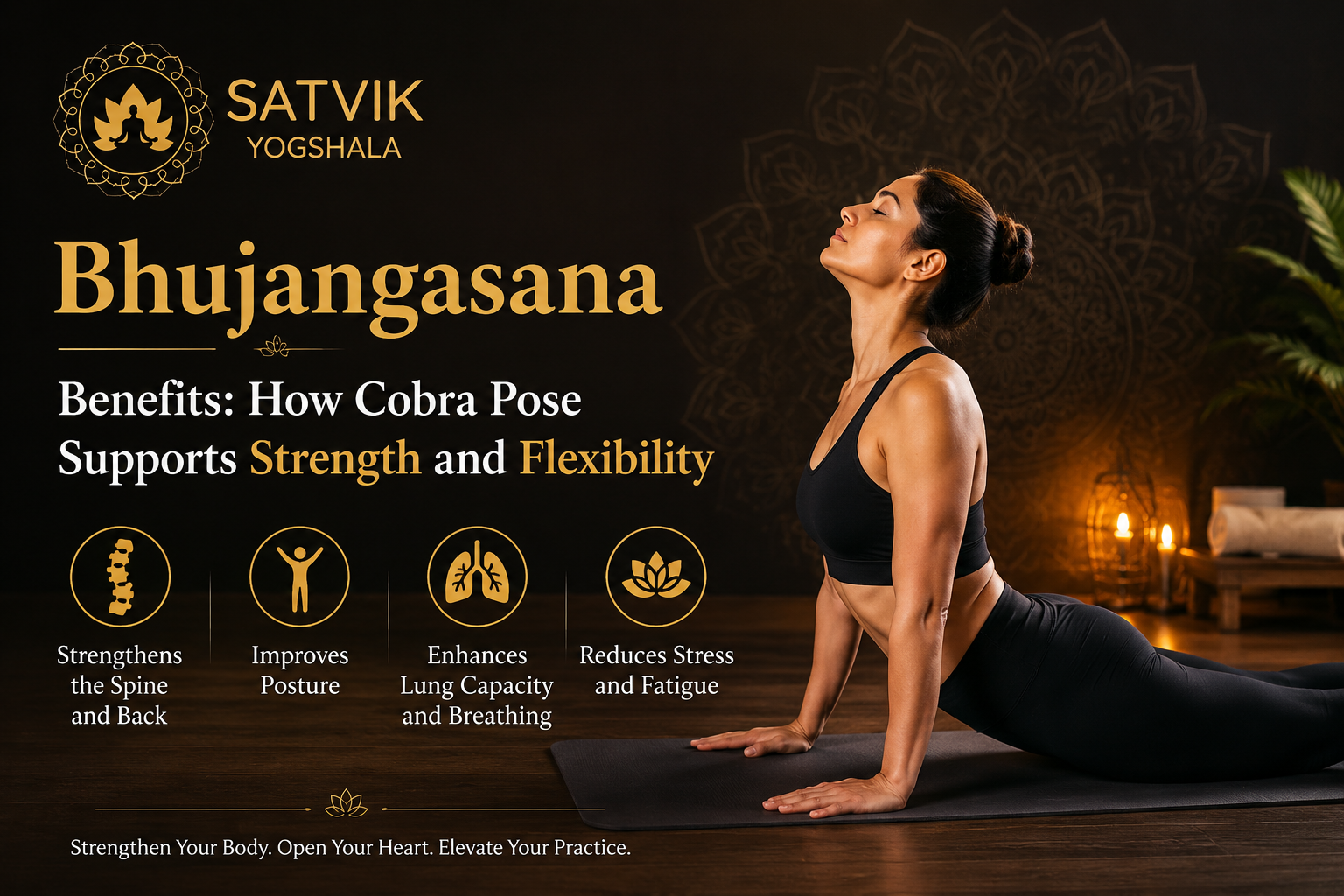
Bhujangasana, also known as Cobra Pose is a basic yoga pose that many people use in both modern yoga routines. It is a backbend that works the spine, chest, shoulders, belly and legs. It also helps people pay attention to their posture and breathing.
This pose is often chosen by those who want to build strength improve movement and increase flexibility in their yoga practice. When done with form Cobra Pose teaches students how to bend the back with control not by forcing the body upward.
Bhujangasana is part of Hatha Yoga, Vinyasa Yoga and other yoga styles. It is especially helpful, for those learning the basics of yoga and want to understand poses better.
What Is Bhujangasana?
The Sanskrit word Bhujangasana comes from Bhujanga, meaning “cobra” or “serpent,” and Asana, meaning “pose” or “posture.”
The posture resembles a cobra raising its head and upper body. The practitioner lies on the stomach and gently lifts the chest while keeping the lower body grounded.
Unlike a forceful backbend, traditional Cobra Pose emphasizes controlled movement, awareness, and comfortable breathing.
How to Practice Bhujangasana
Follow these steps to practice Cobra Pose:
- Lie on your stomach on a yoga mat.
- Extend your legs behind you and keep the tops of your feet comfortably grounded.
- Place your palms beside your chest, with the elbows pointing generally backward.
- Keep the shoulders relaxed and away from the ears.
- Engage the legs gently and establish a stable foundation through the lower body.
- On an inhale, slowly lift the chest using the muscles of the back while keeping the movement controlled.
- Use the hands for support, but avoid pushing yourself into a deeper backbend than feels comfortable.
- Keep the lower ribs and pelvis grounded according to your chosen variation.
- Keep your neck comfortable rather than throwing the head backward.
- Breathe steadily while holding the pose.
- Slowly lower the chest back to the mat.
The height of the chest is not the goal. Comfortable alignment and controlled movement are more important than achieving a deep backbend.
10 Benefits of Bhujangasana
1. Strengthens the Back Muscles
One of the key Bhujangasana benefits is its ability to engage the muscles along the back of the body.
During the posture, the back muscles work to help lift and stabilize the upper body. Practicing Cobra Pose as part of a balanced yoga routine can contribute to greater awareness and strength in the posterior chain.
2. Supports Spinal Mobility
Bhujangasana involves spinal extension, making it a useful posture for exploring controlled spinal movement.
Regular yoga practice that includes appropriate backbends may help practitioners develop greater awareness of spinal mobility. However, the movement should always remain within a comfortable range.
3. Opens the Chest and Shoulders
Cobra Pose creates an opportunity to move the chest forward and upward while the shoulders remain relaxed.
This can help practitioners explore mobility around the chest and shoulders, particularly when the pose is practiced without excessive tension.
4. Encourages Flexibility
Bhujangasana involves movement through several areas of the body, including the spine, shoulders, chest, and abdominal region.
With consistent and appropriate practice, it can become part of a broader routine designed to develop flexibility and mobility.
5. Engages the Core
Although Bhujangasana is commonly associated with backbending, the abdominal region also plays an important role in maintaining controlled movement and stability.
Developing awareness of the relationship between the abdominal muscles, pelvis, and spine can help practitioners perform the posture with greater control.
6. Strengthens the Arms and Shoulders
Depending on the variation, the arms and shoulders provide support during Cobra Pose.
Practitioners can learn to use the hands appropriately without relying entirely on the arms to lift the body. This balance between muscular engagement and mobility is an important aspect of yoga alignment.
7. Develops Postural Awareness
Bhujangasana encourages practitioners to observe the position of the shoulders, spine, chest, pelvis, and legs.
This awareness can help students understand how different parts of the body work together during a backbend.
8. Encourages Mindful Breathing
Backbending postures can provide an opportunity to coordinate movement with breath.
In Bhujangasana, practitioners can focus on maintaining slow, steady breathing rather than holding the breath or forcing the posture.
9. Builds Awareness of Backbend Technique
For yoga students, Cobra Pose can serve as an introduction to the principles of backbending.
It teaches practitioners to explore spinal extension gradually while maintaining stability through the lower body.
10. Complements a Balanced Yoga Sequence
Bhujangasana can be incorporated into sequences that include forward bends, twists, standing postures, and relaxation poses.
Its versatility makes it a useful foundational asana for both personal practice and yoga teacher training.
Bhujangasana for Strength and Flexibility
One of the reasons Cobra Pose is widely practiced is that it combines strength and mobility.
The back muscles contribute to lifting and stabilizing the torso, while the spine and shoulders move through extension. The legs and pelvis also provide an important foundation.
Rather than thinking of flexibility as simply “going deeper,” practitioners should focus on developing controlled movement and comfortable range of motion.
This approach is especially valuable for beginners who are still learning how their bodies respond to backbending postures.
Bhujangasana vs. Upward-Facing Dog
Bhujangasana and Urdhva Mukha Svanasana (Upward-Facing Dog) are sometimes confused because both involve spinal extension.
However, they are different postures.
In Cobra Pose, the pelvis and lower body generally remain grounded while the chest lifts to a comfortable height.
In Upward-Facing Dog, the practitioner lifts the thighs and pelvis away from the floor while supporting the body through the hands and feet.
Understanding this difference is particularly important for students learning Vinyasa or Ashtanga sequences.
Common Mistakes While Practicing Bhujangasana
Pushing Too Hard With the Hands
Using excessive arm strength to force the chest upward can create unnecessary pressure. Instead, allow the back muscles to contribute to the movement.
Lifting Too High
A higher chest position does not automatically mean a better Cobra Pose. Work within a range where you can maintain comfortable breathing and control.
Shrugging the Shoulders
Keep the shoulders relaxed and away from the ears. Avoid creating unnecessary tension in the upper body.
Overextending the Neck
The neck should remain comfortable and coordinated with the spine. Avoid throwing the head backward.
Neglecting the Legs
The legs are part of the foundation of the pose. Keep them active and pay attention to how the lower body supports the backbend.
Holding the Breath
Breathing should remain smooth and natural. If you cannot breathe comfortably, reduce the intensity of the posture.
How Long Should You Hold Bhujangasana?
There is no universal duration for Cobra Pose.
Beginners may start with 10–20 seconds or several comfortable breaths, depending on their experience and the style of practice.
More important than duration is maintaining controlled movement, comfortable breathing, and appropriate alignment.
Bhujangasana Modifications for Beginners
If you are new to Cobra Pose, you can begin with a gentle variation.
- Keep the chest relatively low.
- Use less pressure through the hands.
- Keep the elbows slightly bent.
- Focus on lengthening the spine before lifting higher.
- Reduce the duration of the hold.
- Practice under the guidance of a qualified yoga teacher if you are unsure about alignment.
Remember that yoga is not a competition. The appropriate version of Bhujangasana is the one that allows you to practice safely and comfortably.
Safety Considerations
Bhujangasana involves spinal extension and may not be suitable in the same form for everyone.
Practitioners with current back, neck, wrist, shoulder, or other musculoskeletal concerns should seek appropriate professional guidance before practicing the pose.
Avoid forcing the spine into a deeper backbend and stop if you experience sharp or unusual pain.
Pregnancy and certain medical conditions may also require modifications or avoidance of particular abdominal or prone positions. Individual guidance is recommended when relevant.
Bhujangasana in a Yoga Teacher Training Course
Bhujangasana is an important foundational posture for students studying yoga more deeply.
During a 200 Hour Yoga Teacher Training in Rishikesh, students can learn not only how to perform asanas but also how to understand alignment, modifications, anatomy, sequencing, breathing, and teaching techniques.
Studying Cobra Pose from a teaching perspective means learning to recognize common alignment issues and understanding how to offer appropriate variations for different students.
A good yoga teacher does not simply demonstrate a posture. They also learn how to guide students toward a practice that is safe, mindful, and appropriate for their individual abilities.
Why Study Yoga in Rishikesh?
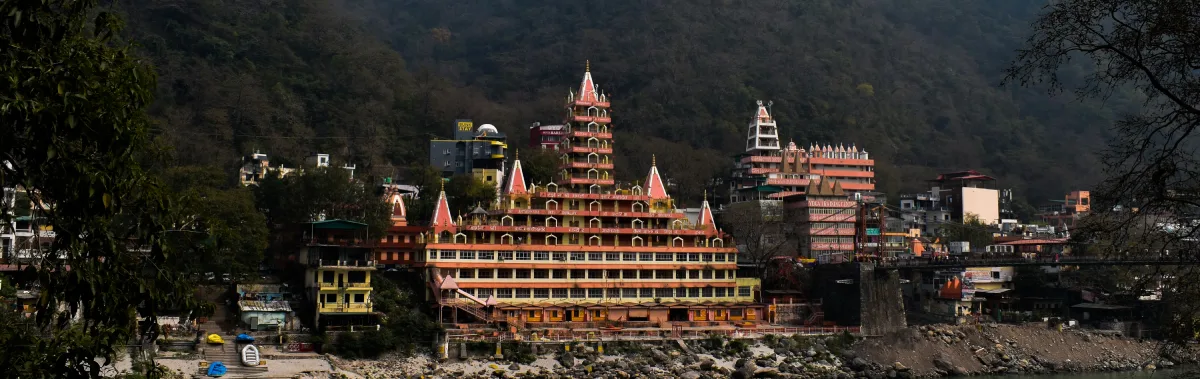
Rishikesh is internationally known as a destination for yoga study and spiritual practice. Students visiting the city can experience a learning environment where traditional yoga teachings are combined with structured practical training.
A 200 Hour Yoga Teacher Training in Rishikesh can introduce students to the foundations of yoga through a combination of asana practice, pranayama, meditation, yoga philosophy, anatomy, alignment, adjustments, sequencing, and teaching methodology.
For someone who wants to turn a personal interest in yoga into a deeper educational journey, structured teacher training can provide a more comprehensive understanding of the practice.
Frequently Asked Questions About Bhujangasana
What are the main benefits of Bhujangasana?
Bhujangasana can help develop awareness and strength in the back and shoulders while supporting mobility through the spine and chest. It can also be included as part of a flexibility and mobility-focused yoga practice.
Is Bhujangasana good for beginners?
Yes. Beginners can practice a gentle version of Cobra Pose. The chest does not need to be lifted very high, and the posture should be performed within a comfortable range.
How long should I hold Bhujangasana?
Beginners can start with several comfortable breaths or approximately 10–20 seconds, depending on their practice. Avoid holding the pose longer if you cannot maintain comfortable breathing or alignment.
What is the difference between Bhujangasana and Upward-Facing Dog?
In Bhujangasana, the lower body generally remains grounded while the chest lifts. In Upward-Facing Dog, the thighs and pelvis are lifted away from the floor and the body is supported through the hands and feet.
Does Bhujangasana improve flexibility?
Bhujangasana can contribute to spinal and upper-body mobility when practiced consistently and appropriately. Flexibility develops gradually and differs between individuals.
Can Bhujangasana strengthen the back?
The posture engages the muscles of the back during spinal extension. When practiced appropriately as part of a balanced yoga routine, it can contribute to back-body strength and awareness.
Why is Bhujangasana taught in yoga teacher training?
Cobra Pose helps students understand foundational concepts related to spinal extension, alignment, muscular engagement, breathing, modifications, and safe teaching.
Conclusion
Bhujangasana, also known as Cobra Pose is a yoga position that brings together strength, movement and flexibility. It helps build body awareness and supports a sense of how the spine stretches and moves. When done slowly and with attention to form this pose allows students to learn how to extend the back in a controlled way.
The aim of Bhujangasana is not to push the chest up as high as possible. The real focus should be on building a base breathing calmly using the right muscles and staying within your own natural limits. Each person’s range of motion is different. Its important to listen to your body and not force anything.
For those who wish to grow beyond doing yoga poses and want to truly understand traditional yoga, a 200 Hour Yoga Teacher Training in Rishikesh offers a clear path. This training covers areas—like asana, breath control, meditation, anatomy, philosophy, alignment and how to teach well. It gives students a foundation, in the full practice of yoga.