



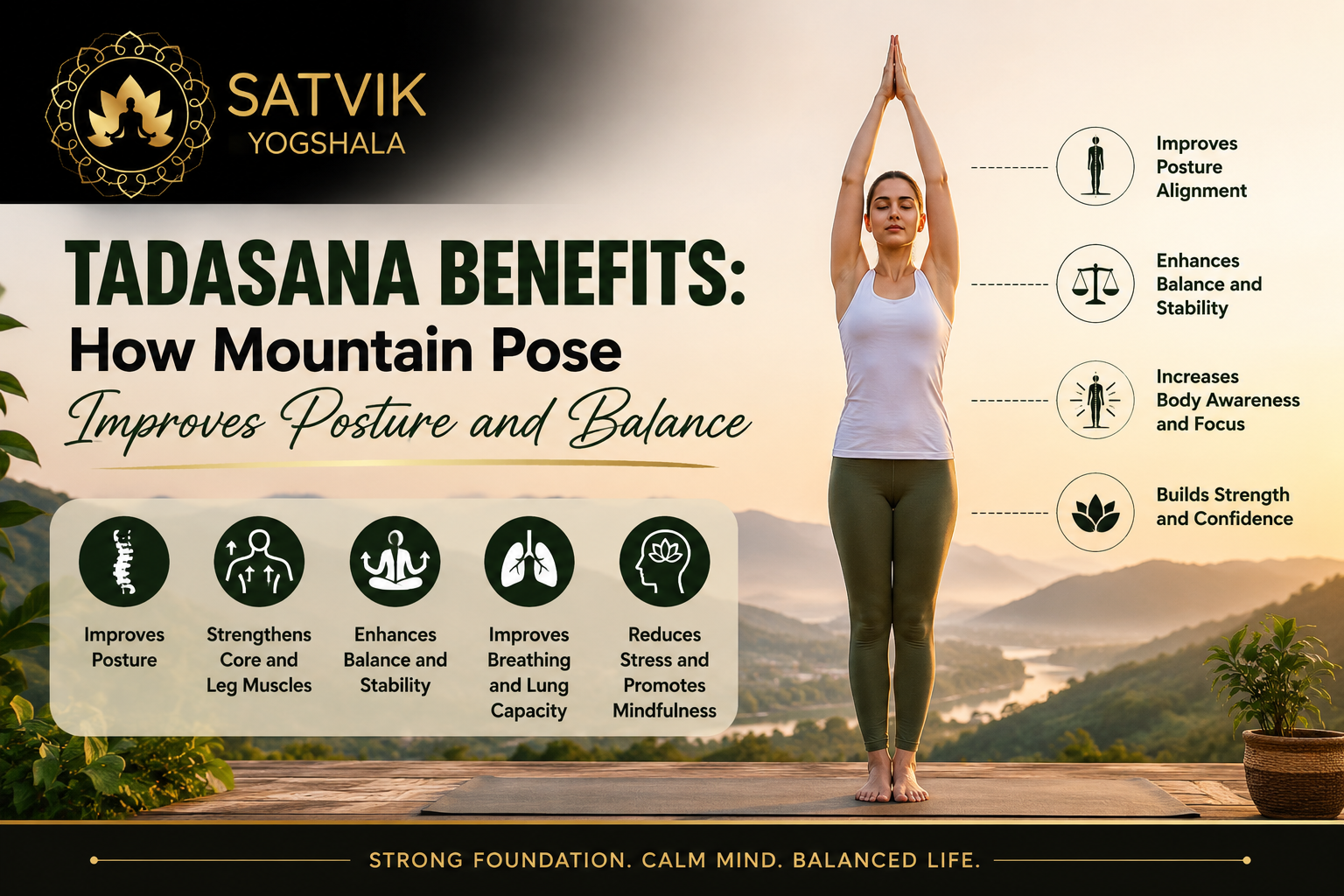
Tadasana, also known as Mountain Pose, is one of the foundational standing poses in yoga. Although it may appear simple, this asana teaches the body how to stand with greater awareness, stability, and alignment. It is commonly practiced at the beginning of a yoga session and can also be used as a transition between standing postures.
The benefits of Tadasana go beyond simply standing upright. Regular practice can help develop body awareness, encourage better posture, improve balance, strengthen the legs, and create a stable foundation for other yoga poses.
Whether you are completely new to yoga or have an established practice, learning Tadasana correctly can help you understand the principles of alignment and mindful movement.
What Is Tadasana?
The word Tadasana comes from two Sanskrit words: Tada, meaning “mountain,” and Asana, meaning “pose” or “posture.” Therefore, Tadasana is commonly translated as Mountain Pose.
In this posture, the practitioner stands upright with the feet grounded, legs active, spine lengthened, shoulders relaxed, and the head positioned naturally over the spine.
Tadasana encourages you to create a sense of stability from the ground upward. Rather than simply standing still, you actively observe the position of your feet, legs, pelvis, spine, shoulders, and head.
How to Practice Tadasana
Follow these basic steps to practice Mountain Pose safely and mindfully:
- Stand upright with your feet together or approximately hip-width apart.
- Distribute your weight evenly across both feet.
- Keep your legs active without locking the knees.
- Gently engage the muscles of your thighs and abdomen.
- Lengthen your spine and allow your chest to remain naturally open.
- Relax your shoulders away from your ears.
- Keep your arms beside your body with your palms facing forward or toward the thighs.
- Keep your chin parallel to the floor and your gaze straight ahead.
- Breathe slowly and naturally.
- Hold the pose for several comfortable breaths while observing your posture.
The goal is not to create unnecessary tension. Instead, focus on finding a comfortable balance between strength, stability, and relaxation.
10 Benefits of Tadasana
1. Supports Better Posture
One of the most well-known Tadasana benefits is its role in developing postural awareness. The pose encourages you to notice whether your head, shoulders, pelvis, knees, and feet are positioned evenly.
With regular mindful practice, this awareness can help you recognize habitual postural patterns during everyday activities.
2. Improves Balance
Mountain Pose provides a simple way to practice maintaining stability while standing. By distributing your weight evenly through your feet and maintaining an upright spine, you can develop greater awareness of your center of gravity.
This makes Tadasana a useful foundation for other yoga poses for balance.
3. Develops Body Awareness
Yoga is not only about flexibility. Awareness of how the body moves and rests is equally important.
Tadasana gives you an opportunity to observe your body from the feet upward. You can notice weight distribution, muscle engagement, spinal alignment, breathing patterns, and areas of unnecessary tension.
4. Strengthens the Legs
Although Tadasana is a stationary posture, maintaining proper alignment requires active engagement of the legs.
The thighs, calves, ankles, and feet work together to provide stability. Practicing the pose with awareness can therefore contribute to functional lower-body strength and stability.
5. Encourages Spinal Length
Tadasana encourages an upright position in which the spine is naturally elongated. Instead of collapsing through the chest or rounding the upper back, the practitioner learns to create space along the spine.
This makes the pose particularly useful when learning the alignment principles used in other standing asanas.
6. Improves Alignment Awareness
Alignment is an important part of many traditional yoga practices. Tadasana allows students to study alignment without the complexity of a more demanding posture.
You can observe the relationship between your feet, knees, hips, spine, shoulders, and head.
7. Creates a Stable Foundation for Other Yoga Poses
Many standing yoga poses begin from a position similar to Tadasana or return to it.
For example, Warrior Pose, Triangle Pose, Tree Pose, and Standing Forward Bend can all benefit from an understanding of grounding and upright alignment developed through Mountain Pose.
8. Encourages Mindful Breathing
Because Tadasana does not require complicated movement, it allows practitioners to focus on breathing.
Slow, comfortable breathing can help you remain present and attentive to physical sensations during the practice.
9. Helps Prepare the Body for Yoga Practice
Tadasana can be used as a gentle starting posture before moving into more dynamic asanas.
It gives practitioners an opportunity to center themselves, establish a steady breath, and prepare their bodies and minds for the practice ahead.
10. Promotes a Sense of Stability
The mountain imagery associated with Tadasana represents steadiness and groundedness. Standing firmly while maintaining relaxed awareness can create a strong physical and mental foundation for a yoga session.
Tadasana for Posture and Balance
The connection between Tadasana and posture is one of the main reasons this asana is included in many yoga practices.
Modern lifestyles often involve long periods of sitting, standing, or looking at screens. Over time, people may develop habits such as rounded shoulders, forward-head positioning, or uneven weight distribution.
Tadasana provides a simple opportunity to pause and reassess your natural standing position.
Rather than forcing the body into a rigid “perfect” posture, practice finding a position where the body feels stable, upright, comfortable, and relaxed.
Tadasana and Balance
Balance depends on more than the ability to stand on one leg. Even ordinary standing requires coordination between the feet, ankles, legs, pelvis, spine, and nervous system.
Tadasana offers a simple environment in which to explore this coordination.
For an additional balance challenge, you can gradually progress from Mountain Pose to poses such as Vrikshasana (Tree Pose). Building awareness in simpler standing postures can make more challenging balance poses easier to understand.
Common Mistakes While Practicing Tadasana
Tadasana looks easy, but beginners sometimes make several common mistakes.
Locking the Knees
Avoid pushing the knees backward or locking them. Keep the legs active while allowing the knees to remain naturally extended.
Raising the Shoulders
Try not to hold tension in the shoulders. Allow them to move away from the ears while keeping the chest naturally open.
Shifting Weight to One Foot
Pay attention to whether more weight is being placed on one side. Aim for an even and comfortable distribution through both feet.
Overarching the Lower Back
Avoid pushing the hips too far forward or exaggerating the curve of the lower back. Keep the pelvis in a neutral, comfortable position.
Creating Too Much Tension
Tadasana should not feel like a rigid military stance. The body should be active but not unnecessarily tense.
How Long Should You Hold Tadasana?
There is no single duration that works for everyone.
Beginners can start by holding Tadasana for 5–10 comfortable breaths. As awareness improves, the pose can be maintained for longer periods during a yoga practice.
The quality of the posture is more important than holding it for a specific amount of time.
Tadasana Modifications for Beginners
If standing with the feet together feels unstable, place your feet approximately hip-width apart.
You can also practice near a wall if you need additional confidence while developing balance.
The most important principle is to practice within your comfortable range and avoid forcing your body into a position that causes pain.
Who Can Practice Tadasana?
Tadasana is generally considered an accessible yoga posture and can be practiced by many beginners. However, individual needs vary.
If you have a current injury, significant balance difficulties, or another physical limitation, consider practicing under the guidance of a qualified yoga teacher or healthcare professional.
Stop the practice if you experience sharp pain, dizziness, or unusual discomfort.
Tadasana in Yoga Teacher Training
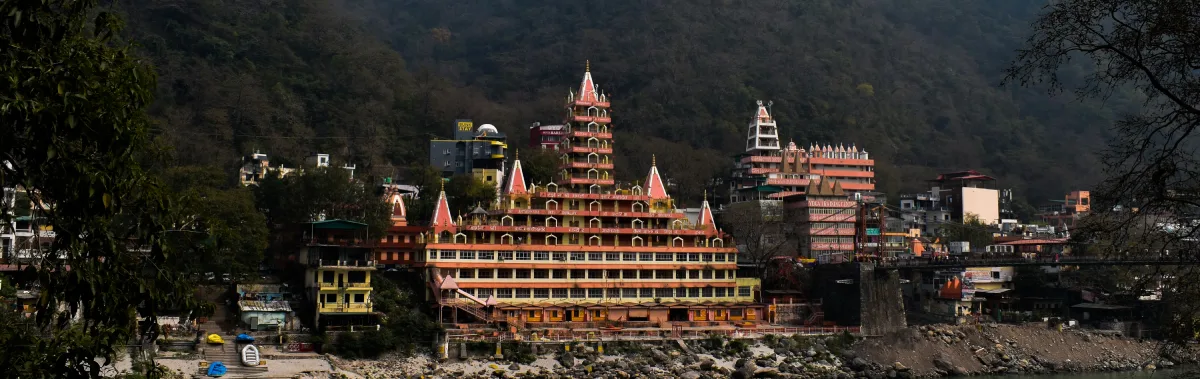
Tadasana is particularly important for students enrolled in a Yoga Teacher Training in Rishikesh because it introduces fundamental concepts of standing alignment, grounding, body awareness, and posture.
Teachers often use Mountain Pose to help students understand how the body should be organized before progressing into more complex asanas.
A strong understanding of Tadasana can therefore become a valuable foundation for teaching and practicing standing yoga postures.
Frequently Asked Questions About Tadasana
What is Tadasana?
Tadasana is a standing yoga posture commonly known as Mountain Pose. It focuses on upright alignment, grounding, stability, and body awareness.
What are the main benefits of Tadasana?
The main benefits of Tadasana include supporting postural awareness, improving balance, strengthening the lower body, encouraging spinal length, and developing greater awareness of body alignment.
Is Tadasana good for beginners?
Yes. Tadasana is one of the foundational standing poses and can be practiced by beginners with appropriate modifications.
How long should I practice Tadasana?
Beginners can start with several comfortable breaths and gradually increase the duration as they become more familiar with the posture.
Can Tadasana improve posture?
Regular mindful practice can improve awareness of standing alignment and help you recognize habitual postural patterns. It should not be viewed as a guaranteed treatment for a specific posture-related condition.
Can I practice Tadasana every day?
Tadasana is a relatively simple foundational posture and can be incorporated into a regular yoga routine. Practice comfortably and avoid forcing the body.
Conclusion
Tadasana, or Mountain Pose, is a simple yet powerful foundation for a mindful yoga practice. Its emphasis on grounding, alignment, balance, and body awareness makes it valuable for beginners as well as experienced practitioners.
By practicing Tadasana regularly, you can become more aware of how you stand, distribute your weight, engage your muscles, and organize your body in relation to gravity. These principles can then be carried into other yoga asanas and everyday movement.
If you are interested in developing a deeper understanding of traditional yoga, anatomy, alignment, pranayama, meditation, and teaching methodology, a structured Yoga Teacher Training Course in Rishikesh or Kerala can provide a more comprehensive learning experience.